Process
How dried mango is made
Dried mango is peeled, sliced mango with most of the water removed. Before that drying step, a producer either adds sugar, adds sulfites, or adds nothing. That choice, more than the machine, is what you taste and what the label has to say.
Orchard to pouch
Move through the steps, or read them in order. Slice thickness sets the time and the temperature. A kitchen dehydrator chart is for home drying, not a commercial line.
- 01
Start with ripe fruit
Drying concentrates whatever the mango already is. A fragrant ripe fruit stays fragrant. An underripe one stays sharp. Variety and ripeness do more for the pouch than the dryer brand.
- 02
Peel and cut off the pit
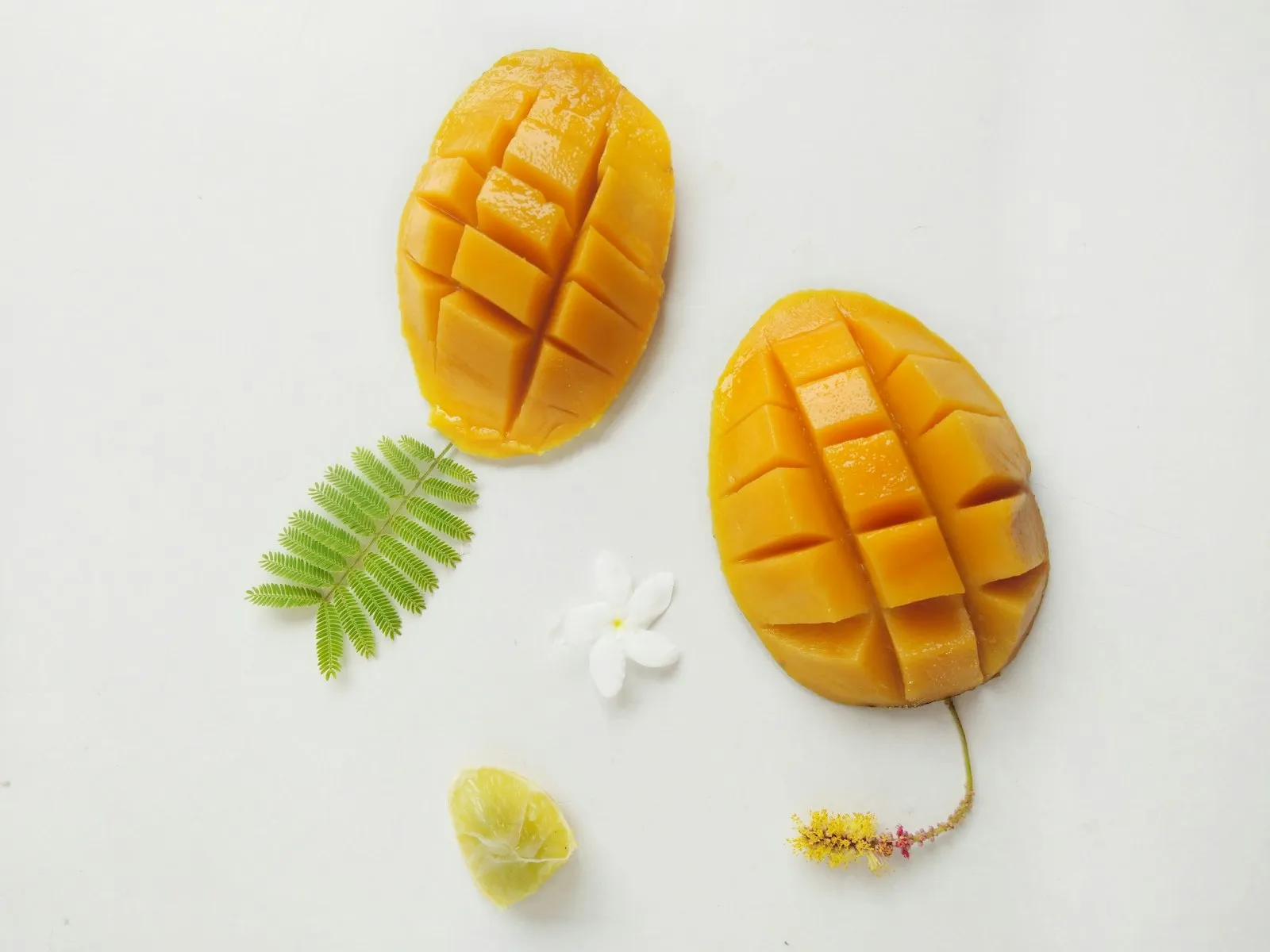
Cheeks are sliced from the flat sides of the pit, then the peel comes off. Even slices dry more evenly. The scraps around the pit are often pureed for leather instead of slices.
- 03
Decide what, if anything, is added
Some producers add sugar or syrup before drying. That is sweetened, or infused, mango, and sugar belongs on the ingredient list. Others add sulfites so the color stays bright. Others add nothing. That choice is the whole difference between products that look alike on a shelf.
- 04
Take the water out
Sun, a solar dryer, or warm air can all do the job. USDA’s sweetened dried mango has 16.6 g of water per 100 g, against 83.46 g in raw mango. Thicker slices take longer.
- 05
Pack it against moisture
Once the water is low, the fruit keeps because microbes have little available water to grow in. A pouch that seals again matters after you open it. Humidity puts the water back, and the pieces turn sticky.
- 06
Read the finished label
The ingredient line is the record of step three. One ingredient means no sugar was added and no sulfite was declared. “Mango, sugar” is a different food from “mango.” Sulfites at 10 parts per million or more have to be declared in the United States.
Three styles, one fruit
| Style | What happened | How you spot it |
|---|---|---|
| Fruit only | Water left. Nothing was added. | The ingredient is mango. |
| Sweetened or infused | Sugar or syrup went in before or during drying. | Sugar appears in the ingredients. USDA’s reference record is this style. |
| Sulfured | A sulfite was used, usually to hold a bright color. | Sulfur dioxide or a sulfite salt is declared when it is at or above 10 ppm in the United States. |
Color and sulfites have their own page, sulfured and unsulfured. The calorie consequence of the sweetened style is the 319 kcal record.
Sources
- Mango, dried, sweetened — 16.6 g water per 100 g
- Mangos, raw — 83.46 g water per 100 g
- 21 CFR 101.100(a)(4) — Sulfites at 10 ppm or more in a finished food must be declared.